What is Tokenisation of Real-World Assets?
A plain English guide to the technology that's making investments more accessible
You've probably heard the word "tokenisation" thrown around alongside blockchain and crypto. And if you're like most people, you might have tuned out, assuming it's just another complicated tech thing that doesn't apply to you.
Here's the thing though: tokenisation isn't really about technology. It's about access.
For decades, the best investment opportunities have been locked away behind high minimums and exclusive networks. Private credit deals. Commercial property. Infrastructure projects. You needed R1 million or more just to get a seat at the table. Tokenisation changes that.
So what actually is tokenisation?
Think of tokenisation like a digital title deed.
When you buy a house, you get a title deed that proves you own it. That piece of paper is your proof of ownership, registered in a government database.
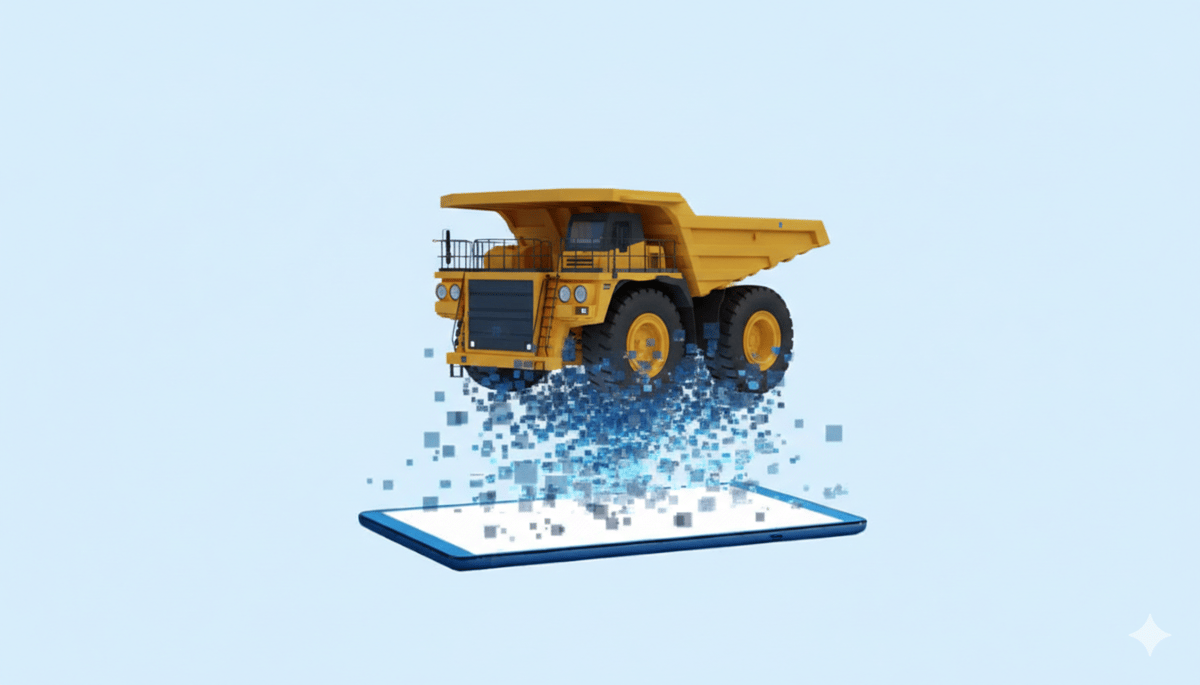
Tokenisation does something similar, but digitally. It creates a digital record of ownership, called a "token", that's stored on a blockchain (a type of secure, shared database). This token represents your stake in a real asset: a building, a loan to a business, a piece of equipment, or even a bond.
The asset is real. The ownership is real. The token is just a more efficient way to record and transfer that ownership.
How is this different from cryptocurrency?
This is where many people get confused, and understandably so.
Cryptocurrency (like Bitcoin) derives its value from scarcity, network effects, and speculation. There's no physical asset backing it. Its price goes up and down based on what people believe it's worth.
Tokenised real-world assets are different. They're backed by actual things: property that generates rent, loans that pay interest, equipment that businesses use every day. The token represents ownership of something tangible.
Here's a simple way to think about it:
Cryptocurrency | Tokenised Real-World Assets | |
|---|---|---|
Backed by | Nothing physical | Real assets (property, loans, equipment) |
Value comes from | Speculation and scarcity | Income from the underlying asset |
Volatility | High | Generally lower (tied to asset performance) |
Returns | Price appreciation (if any) | Often regular income (interest, rent, dividends) |
So when someone says they're investing in "tokenised assets," they're not gambling on the next meme coin. They're buying a digital stake in something real.
Why does this matter for ordinary investors?
Tokenisation solves a few real problems that have kept regular people out of good investments:
1. High minimums become low minimums
Traditional private investments often require R500,000 or R1 million to participate. Tokenisation allows assets to be divided into smaller pieces. Instead of needing R1 million, you might invest R5,000 or R10,000.
South Africa saw this in action in April 2024, when Die MOS Inisiatief (a private school network) raised R100 million through a tokenised bond on Mesh.trade. The minimum investment? Just R5,000. And 17% of the investors were retail investors, ordinary people who wouldn't normally have access to a corporate bond.
2. Illiquid investments become tradeable
One of the biggest problems with traditional private investments is that your money gets locked up. Buy into a property syndication or a private equity fund, and you might not see your capital for 5-10 years.
Tokenised assets can be traded on secondary markets. If you need your money back, you can sell your tokens to another investor, similar to selling shares on the stock exchange. You're not stuck waiting for the investment to mature.
3. Complexity becomes transparency
Traditional investment structures often involve layers of intermediaries, each taking their cut. By the time returns reach you, fees have eaten into your gains. And it's hard to see exactly what you're paying for.
Tokenisation can simplify this. Ownership is recorded on a blockchain, which creates a clear, auditable trail. You can see exactly what you own.
What kinds of assets can be tokenised?
Almost anything with value can be tokenised. The most common examples include:
Bonds — debt instruments that pay regular interest
Commercial property — office buildings, retail centres, warehouses
Private credit — loans to businesses secured against real assets
Infrastructure — solar farms, wind turbines, transport equipment
Commodities — gold, silver, agricultural products
The Die MOS bond is one example. Another is 27four's tokenised property investments on Mesh, which gives investors exposure to commercial real estate.
Globally, BlackRock (the world's largest asset manager) has launched BUIDL, a tokenised US Treasury fund that has already surpassed $1 billion in assets. When BlackRock's CEO Larry Fink says "the next step going forward will be the tokenisation of financial assets," it's worth paying attention.
How big is this market?
Tokenised real-world assets are still early, but growing fast.
According to McKinsey, the tokenised asset market could reach $2 trillion by 2030 in a base case, and potentially $4 trillion in an optimistic scenario. Boston Consulting Group and Ripple project even higher: $18.9 trillion by 2033.
Today, the market sits at roughly $24-33 billion globally. That's small compared to traditional markets, but it's grown over 300% in three years.
Is tokenisation regulated in South Africa?
Yes, and the regulatory framework is evolving.
The Financial Sector Conduct Authority (FSCA) now requires crypto asset service providers to be licensed. Platforms like Luno, VALR, and Mesh.trade operate under FSCA oversight.
The South African Reserve Bank (SARB) is also developing regulations for the broader crypto asset sector. Their approach is phased, focusing first on the "on-ramps" and "off-ramps", the places where you exchange rands for digital assets and back again.
Importantly, tokenised securities (like the Die MOS bond) are treated as financial products and must comply with existing financial services regulations. This is different from speculative cryptocurrencies.
What are the risks?
Tokenisation is not risk-free. I want to be upfront about that.
The underlying asset can still fail. If you own a token representing a loan to a business, and that business can't repay, you could lose money. The token doesn't eliminate investment risk. It just changes how ownership is recorded.
Secondary markets may be thin. While tokenisation enables trading, you need buyers to sell to. In a new or small market, you might not find a buyer at the price you want, when you want. This is a real concern in South Africa where the market is still developing.
Technology risks exist too. Blockchains are generally secure, but no system is perfect. Smart contract bugs, platform failures, or cyber attacks are all possibilities.
And regulation is still developing. While South Africa has made progress, the rules are still being written. This creates some uncertainty about how tokenised assets will be treated in future.
As with any investment, understand what you're buying and only invest what you can afford to lose.
The bottom line
Tokenisation is not about cryptocurrency or speculation. It's about using technology to make real investments more accessible.
You might need thousands rather than millions to invest in a corporate bond. You might be able to trade your position rather than locking up money for a decade. You can see exactly what you own rather than navigating complex fund structures with hidden fees.
It's early days. The market is small, the technology is new, and the regulations are still being written. But for South African investors who've felt locked out of opportunities that seemed reserved for the wealthy, tokenisation is a genuine shift in how investing can work.
The technology is just the enabler. The real story is access.
- 1.McKinsey & Company — What is tokenization?
- 2.McKinsey & Company — From ripples to waves: The transformational power of tokenizing assets
- 3.Mesh.trade — Successful First Tokenised Bond Issuance in Africa
- 4.Mesh.trade — Die MOS Bond Issuance: Frequently Asked Questions
- 5.IOL Business Report — Mesh.trade raises R100m capital after successful launch
- 6.South African Reserve Bank — Digital assets in payments and transaction banking (Working Paper)
- 7.TechCentral — How tokenisation is rewiring global finance – and why South Africa can't sit it out
- 8.CoinDesk — McKinsey Sees Just $2T of Tokenized RWAs by 2030
- 9.CoinDesk — RWA Tokenization Is Going to Trillions Much Faster Than You Think
- 10.World Economic Forum — How will asset tokenization transform the future of finance?
Written by
Share
This article was originally published on February 2, 2026 and was last updated on March 10, 2026.
This article is for educational purposes only and does not constitute financial advice. The content presented is not intended as a marketing or promotion of any financial product or investment opportunity. Private market investments carry risks, including the potential loss of capital and limited liquidity. Past performance does not guarantee future results. Always do your own research and consider consulting a qualified, registered financial adviser before making any investment decisions. The views expressed are those of the author and do not necessarily reflect the position of Fedgroup Financial Holdings (Pty) Ltd or any of its entities.